Remember the last scene of Back to the Future when Doc Brown returns in his flying DeLorian to take Marty to the year 2015? As a 5 year old kid in 1985 I still remember being fascinated, not only because the car was flying, but because the new DeLorian was powered by garbage instead of plutonium. At the time I didn’t even know what plutonium was. But garbage fuel – now that was a cool concept.
In 2008, people are finally starting to work on garbage-powered aviation. The Solena Group, a Washington DC company that builds and operates renewable energy power plants in North America, Asia and Europe, has started work on a facility that will produce jet fuel from trash, tree bark and manure using a process called plasma gasification. It uses 5000-degree plasma arcs to break trash into gas fuel, which is then converted into liquid suitable for powering an airplane.
The plasma gasification and the gas-to-liquid conversion processes will release significant amounts of CO2 into the environment, but the company claims that the CO2 does much less harm to the environment than emissions created by decomposing landfill waste and reliance on petroleum based aviation fuel. (According to the Department of Transportation, aviation accounts for 2.7 percent of U.S. annual greenhouse gas output.) Also, energy generated from the plasma arcs is used to power the system, which makes it self-sustaining.
Solena plans to build its plant in Gilroy, California, (home of the famous Gilroy Garlic Festival) where it will have access to a steady stream of household trash from Norcal Waste Systems, a big California garbage collection company.
The Company won’t begin production until 2011, despite some U.S. biofuel tax credits being scheduled to expire in 2008. Also, no commercial airlines have expressed interest in the project. But if prices of fuel keep going up there could be some significant interest by 2015, and maybe Back to the Future director/writer Robert Zemeckis will turn out to be a true science visionary, not just a great Sci-Fi creator.
An old friend of mine at Columbia University business school recently returned from Dubai where he had traveled with his class for spring break.
He told me that there were tons of chic restaurants and bars, but that the place had “no real culture.” Everyone on the street was from a different country and speaking English, every type of food was available much like one would find in any major city, and the nightlife scene reminded him of South Beach, Florida. The place exists for foreigners – business people and rich vacationers (primarily from Europe).
My friend said that the construction going on there was incredible, and he wondered if the place was being overbuilt. Dubai recently constructed the Burj Dubai, the tallest building in the world. It also has a network of tiny man made islands for vacationers called “The World” which combine to form the shape of the continents. Presently the city is constructing three more gigantic man made islands in shape of palm trees. The reason for the shape is that the fingers of land which serve as the branches of the palm dramatically increase the available beach front property to build hotels on.
The unprecedented rate of construction in Dubai is made possible by the country’s abundant supply of dirt cheap labor from India and other countries of that region. The workers generally receive about seven dollars a day, and because they don’t have unions it’s possible to make them work longer hours and do other activities the U.S. would prohibit. Many people have even characterized Dubai’s manual labor workforce as slave labor.
Take a look at “Next” in Today’s Machining World’s April issue for more on Dubai.
Video of massive construction in Dubai from Fall of 2006 to Spring of 2007
Today, April 21, in 1878, the fire station pole was invented. Prior to the existence of fire station poles, firemen often used sliding shoots like those in playgrounds to quickly get down to the ground floor, as opposed to taking a slower staircase. Like so many inventions it was inspired by an accident. At Engine Company 21, a station of all black firemen in Chicago, fireman George Reid was in the hayloft on the station’s third floor (back then hay was needed for the horses which pulled the fire “engines”). A long binding pole used to secure the hay to the wagon was sticking vertically up the loading area into the hay loft, when suddenly the fire bell rang and Reid impulsively slid down the pole to get to the ground.
The Station’s captain David Kenyon liked the concept, and he and the Chief decided to cut a hole in the second floor and install a permanent pole made of waxed, varnished, Georgia Pine three inches in diameter. Soon Engine 21 got the reputation of being the first responders, inspiring the rest of Chicago’s fire stations to install their own poles.
In 1880, Boston advanced the idea by making its fire stations’ poles from shiny, slippery brass.
Today fire station poles are no longer en vogue, as many people consider them safety hazards. New firehouses are often built without them, and one-story fire stations are generally preferred.
In 1962, the French government created CTDEC, a research and training center primarily devoted to screw machining, in France’s Haute-Savoie region, located right across the border from Geneva, Switzerland. Comprised of 630 member companies, CTDEC has an annual budget of 6.3 million euros, and contains 6,600 square meters of laboratories and workshops.
One of the most interesting resources at the CTDEC is its advanced diagnostic center used to identify part defects. It contains an extremely powerful microscope that can magnify objects tens of thousands of times. It has the strength to see inside an ant’s eye and can surpass that magnification quantity exponentially. CTDEC charges 90 euros per hour for companies to use services such as this one, and non-member companies from around the world are allowed to use the facilities services for the same fee.
The first week of April, Noah Graff of TMW attended a press junket put on by the Arve-Industries Competitiveness Pole in the Haute-Savoie of France, a historic and current hotbed of machining close to Geneva Switzerland. The first day the journalists had a tour of the Musee de l’Horlogerie et du De`colletage, or, Museum of Clocks and Screw-Machining.
Jeff and Brad Ohlemacher, president and vice president of Elyria Manufacturing, talk about utilizing Verne Harnish’s Rockefeller habit of “the huddle” to unify their employees.
Today’s Machining World did an interview in the April issue with David Plitt, the foreman of the U of C machine shop. This video is an excerpt of the interview. He discusses several of the projects that the machine shop has assisted with, including a balloon designed to collect cosmic rays.
Machinery dealer Jim Graff just got back from a Delphi auction in Kettering Ohio. He reported that most machines there were selling very cheaply and that many were leaving the country. The two biggest buyers at the auction were from India and Peru, who primarily bought small production machines such as milling machines, Bridgeports, and Dennison Presses. Most of the Acme multi spindles and Acme repair parts were baught by dealers. Jim also observed that there was a strong presence of online bidders.
This day on March 18, 1662, the first bus service began in France. Blaise Pascal, most famous for his mathematics, physics and philosophical genius, conceived the idea. The system started with seven horse-drawn vehicles running along regular routes. Each coach could carry six or eight passengers. King Louis XIV granted a royal monopoly: Try to compete, and your horses and vehicles would be taken away.
The fundamental problem of the bus service’s business model was that in the feudal society of seventeenth century France only the nobility and gentry were allowed to ride, which they did purely for amusement. The common folks that the service could really benefit, the soldiers and peasants, weren’t allowed to ride, so when the novelty of the new invention wore off, bus service ended in 1695.
The bus concept did not reappear in France, along with New York City and London until early Nineteenth Century – post feudalism.
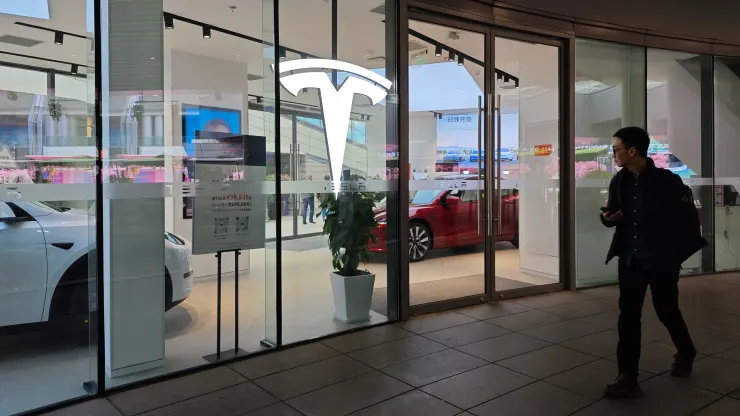
Most great inventions follow a similar pattern as the bus’s. They start out as a novelty only accessible to the elite. Not until they finally become accessible to the masses do they have the power to change the world. When the first computers were invented only a select group of scientists could use them. People dismissed the idea that they could be useful to the common man. Not until personal computers became affordable to the world’s middle class and easy enough for an average person to operate, did they revolutionize how people communicate and find information. Yesterday, March 17, Tesla Motors began production on its Tesla Roadster, which will sell for a base price of 98,000 dollars. It will look cool, it will be better for the environment than cars with internal combustion engines, it will eliminate the need for its owner to buy gasoline, but until the masses can afford one and reap its benefits the electric car will not change the world.
A recent story by Frank Langfitton on NPR’s “All Things Considered” reported that rising costs and shifts in Chinese government policy are actually forcing hundreds of smaller Chinese factories to close. According to the story, profit margins are disappearing as a result of the rising Chinese currency value, which has forced manufacturers to move their operations to lower cost countries such as Vietnam.
The story reports that China’s government wants to encourage higher-tech manufacturing, so it is taking away the incentives it used to give to cheap goods manufacturers such as no taxes and cheap rent. China wants to follow the same path as its fellow Asian countries such as Japan and Taiwan, whose products eventually progressed from low-tech to high-tech. This movement to more sophisticated types of production has created the same obstacle for Chinese companies that challenges U.S. companies – finding skilled labor.